
Usually, when I think about the fashions of the Regency era, I focus on the grand markers of wealth—the sprawling country estates, the fine horse-drawn carriages, and the absolute army of household servants. But sometimes, the ultimate display of high status and impeccable taste sat quietly right on the dining room sideboard.
I’m talking about the knife urn.
For the upper classes of Georgian and Regency society, storing your silverware wasn’t just a matter of utility; it was a matter of fashion. In many households the common form of cutlery storage was a mahogany box with a sloping top and a “serpentine” front. But wealthier households opted for neoclassical, urn-shaped cases. They were usually made in pairs to stand like stately sentinels on each end of a dining-room sideboard.
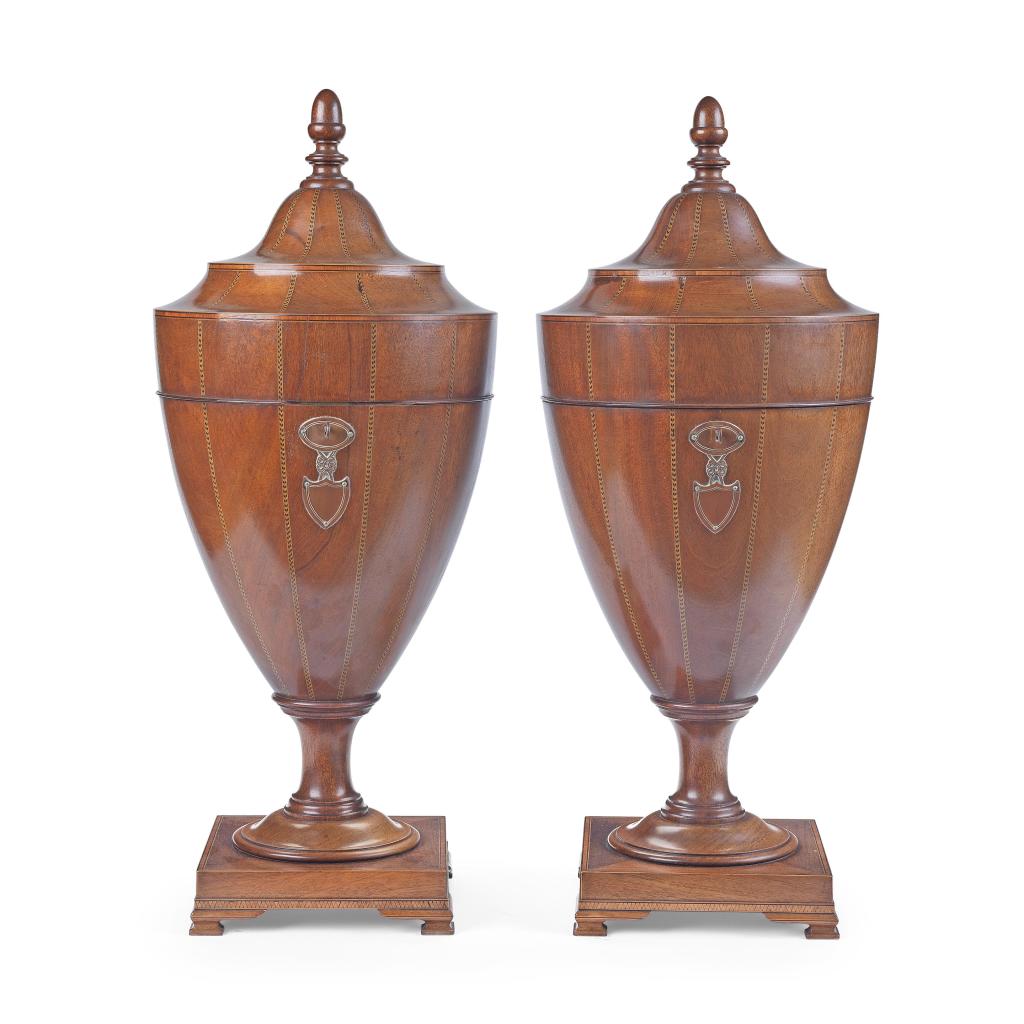
Famous period designers like Thomas Hepplewhite noted their “universal utility,” while Thomas Sheraton noted that making these exquisite cases had become such a highly specialized craft that individual London makers could build entire businesses solely around producing them. Crafted from the finest mahogany with intricate satinwood and ebony inlays, these urns featured lift-up lids that rose on a central support to reveal beautifully fitted interiors designed to showcase individual knives, forks, and spoons.
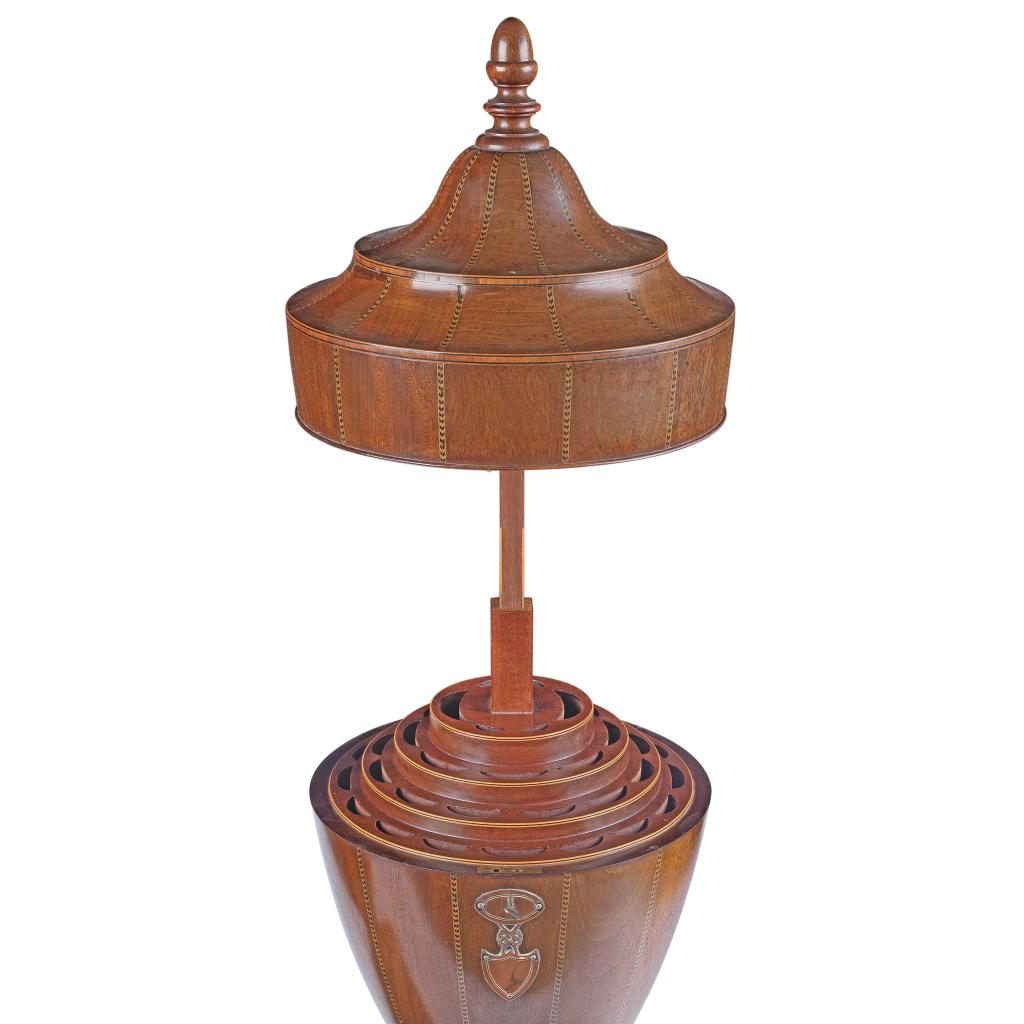
If you’ve never seen a knife urn in action, you only have to look at our favorite period dramas!
In the 1980 BBC adaptation of Pride and Prejudice, you can see a costly, elegant knife urn standing tall just inside the door of the Bennet family’s dining room at Longbourn.
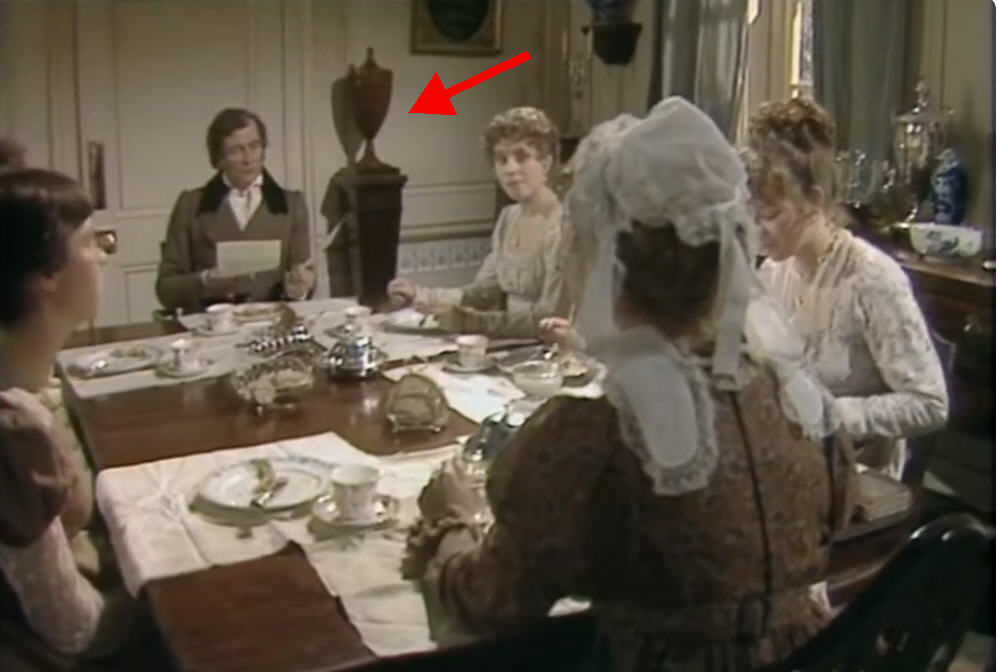
I think this small decorative detail is absolutely appropriate. The Bennets were a family of acceptable gentlemanly wealth—they kept a cook, multiple house servants, and a carriage—so having a fashionable neoclassical urn perfectly matches their social status.
Fast forward to the iconic 1995 BBC version of P&P, and the set designers chose a slightly different, yet equally accurate option for Longbourn. On the Bennet sideboard, we can see the classic serpentine-style cutlery box, bursting with silver.
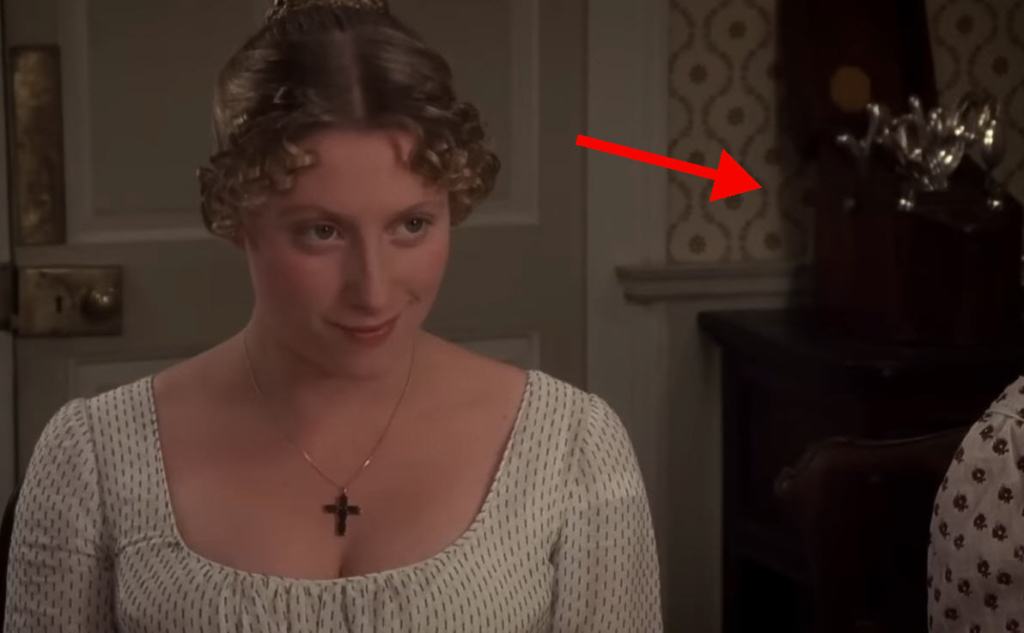
And what about the truly affluent, fashion-forward characters we love? Naturally, the ultra-fashionable Bingley dining room at Netherfield had to have the best of the best. If you look closely at the background behind Mrs. Hurst, you can see a magnificent knife urn reigning over the Netherfield dining room.
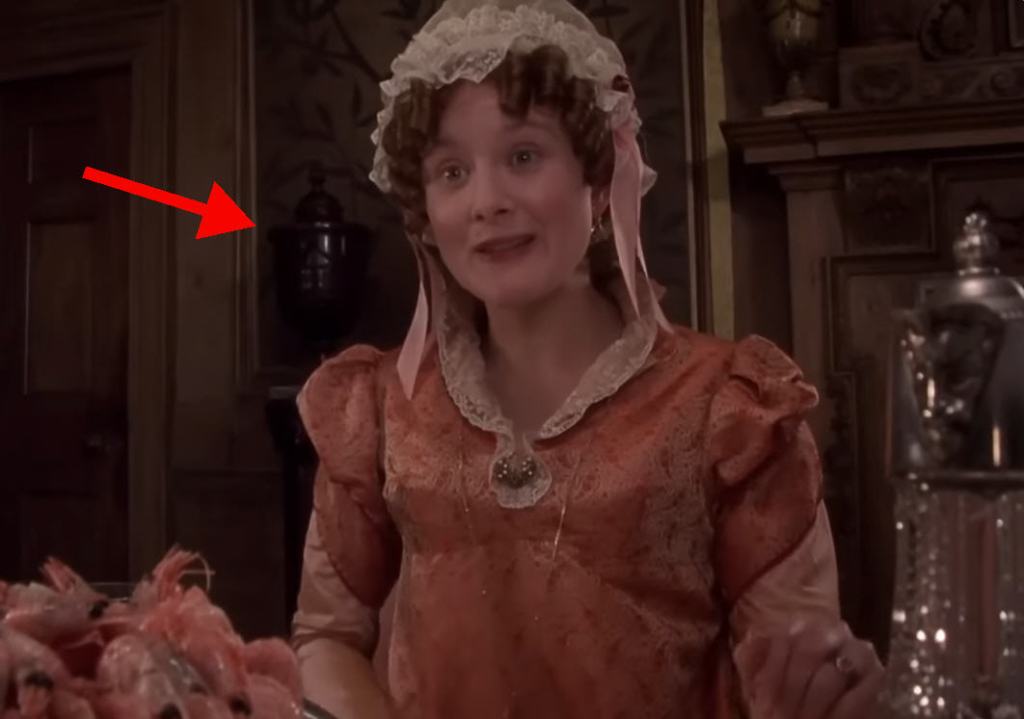
It is a wonderful detail that subtly shows the Bingley sister’s desire to look modern and wealthy.
Sadly, very few of these genuine knife urns survive with their original interiors intact today. During the Victorian era, many families ripped out the cutlery slots to convert them into stationery boxes and desk tidies. But when we find them preserved—or spot them gracing the backgrounds of our favorite Jane Austen adaptations—they serve as a beautiful reminder of how the Regency era turned even the most mundane household objects into an art form.
As a writer, it’s these tiny, everyday historical textures that make world-building so much fun. The next time you read about a lavish dinner party in one of my books, there’s a very good chance I wrote the scene while imagining a pair of beautiful mahogany urns gleaming in the candlelight.
I’D LOVE TO HEAR FROM YOU. Are you the type of viewer who pauses period dramas to inspect the furniture in the background, or do you get completely swept up in the action and dialogue? What are your favorite decorative details from Regency households?


