The Art and Status of Regency Knife Urns

Usually, when I think about the fashions of the Regency era, I focus on the grand markers of wealth—the sprawling country estates, the fine horse-drawn carriages, and the absolute army of household servants. But sometimes, the ultimate display of high status and impeccable taste sat quietly right on the dining room sideboard.

I’m talking about the knife urn.

For the upper classes of Georgian and Regency society, storing your silverware wasn’t just a matter of utility; it was a matter of fashion. In many households the common form of cutlery storage was a mahogany box with a sloping top and a “serpentine” front. But wealthier households opted for neoclassical, urn-shaped cases. They were usually made in pairs to stand like stately sentinels on each end of a dining-room sideboard.
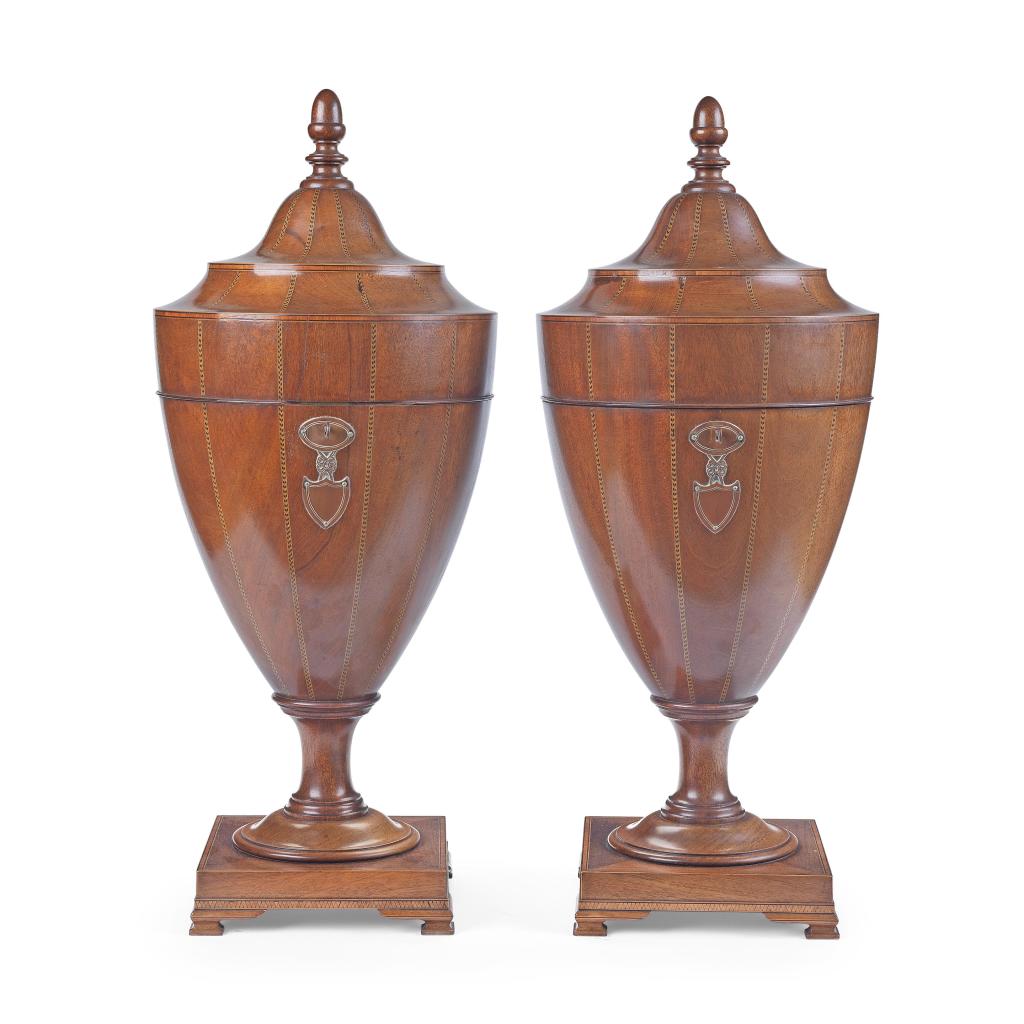

Famous period designers like Thomas Hepplewhite noted their “universal utility,” while Thomas Sheraton noted that making these exquisite cases had become such a highly specialized craft that individual London makers could build entire businesses solely around producing them. Crafted from the finest mahogany with intricate satinwood and ebony inlays, these urns featured lift-up lids that rose on a central support to reveal beautifully fitted interiors designed to showcase individual knives, forks, and spoons.
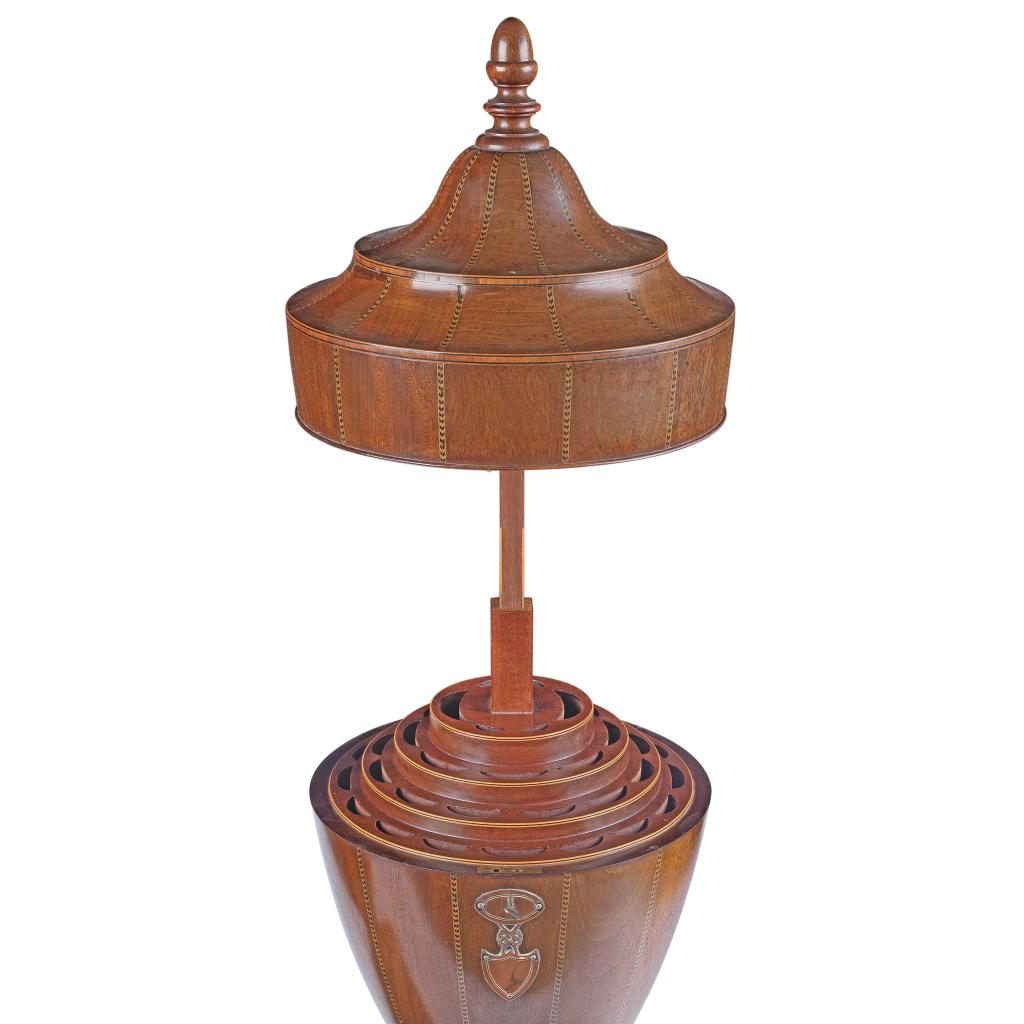

If you’ve never seen a knife urn in action, you only have to look at our favorite period dramas!

In the 1980 BBC adaptation of Pride and Prejudice, you can see a costly, elegant knife urn standing tall just inside the door of the Bennet family’s dining room at Longbourn.
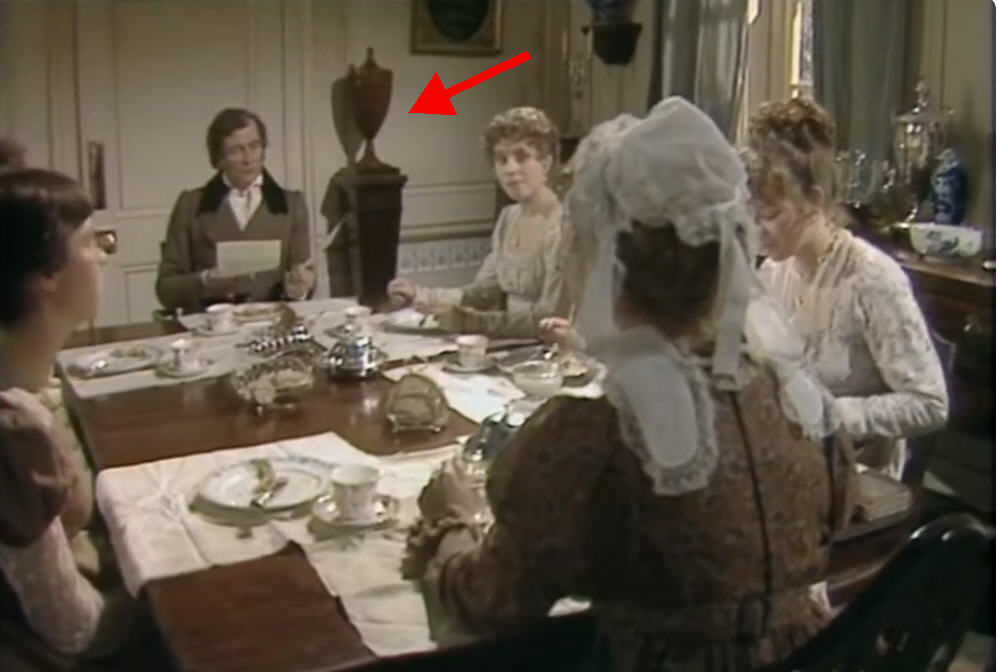

I think this small decorative detail is absolutely appropriate. The Bennets were a family of acceptable gentlemanly wealth—they kept a cook, multiple house servants, and a carriage—so having a fashionable neoclassical urn perfectly matches their social status.

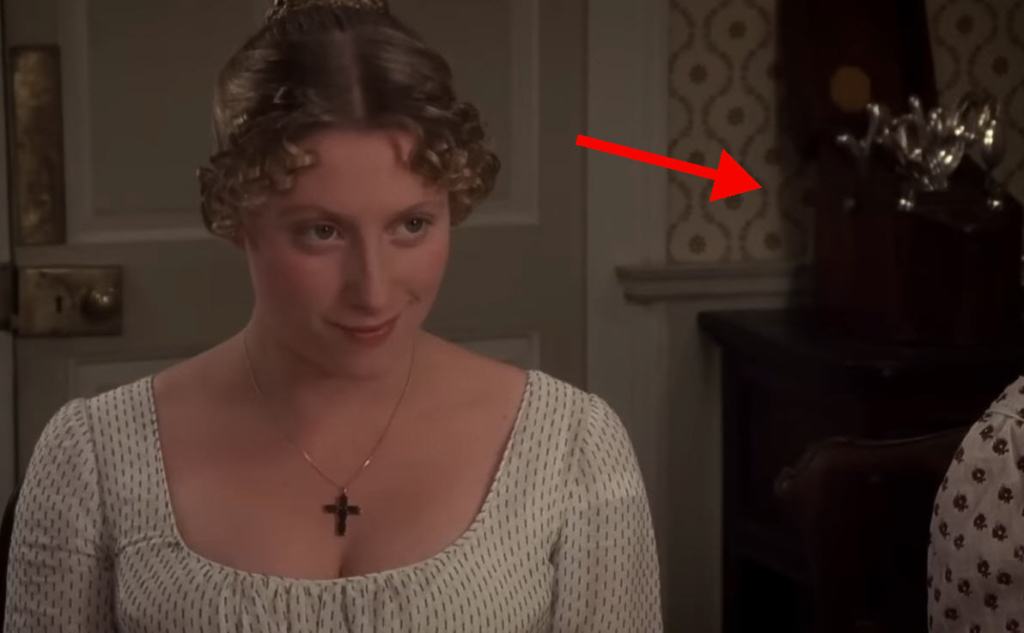
Fast forward to the iconic 1995 BBC version of P&P, and the set designers chose a slightly different, yet equally accurate option for Longbourn. On the Bennet sideboard, we can see the classic serpentine-style cutlery box, bursting with silver.

And what about the truly affluent, fashion-forward characters we love? Naturally, the ultra-fashionable Bingley dining room at Netherfield had to have the best of the best. If you look closely at the background behind Mrs. Hurst, you can see a magnificent knife urn reigning over the Netherfield dining room.
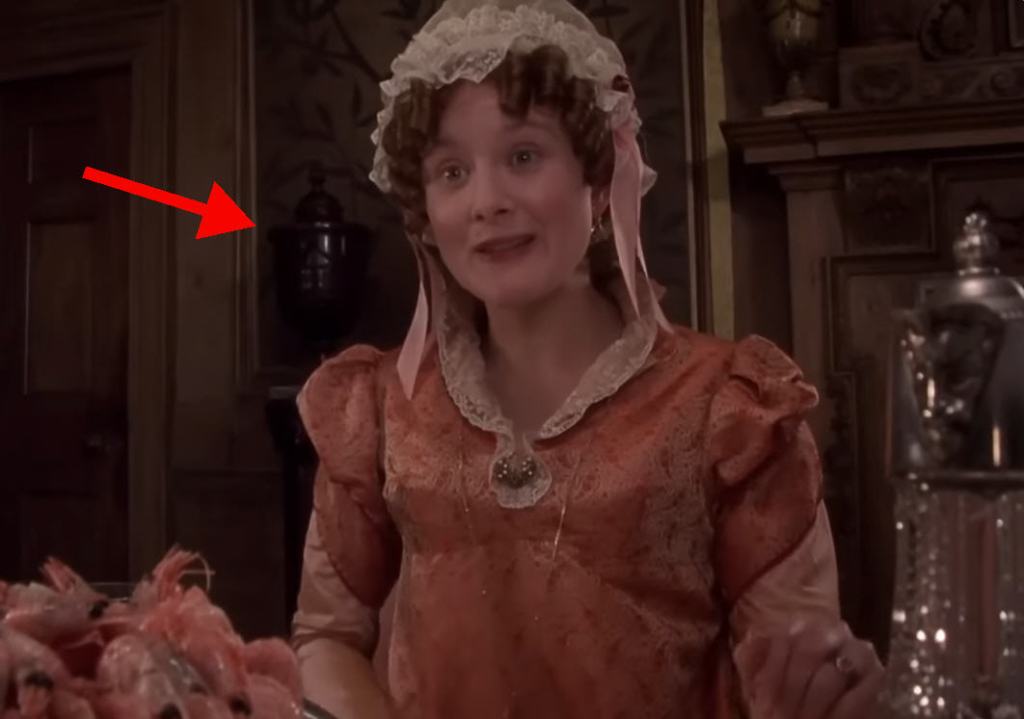

It is a wonderful detail that subtly shows the Bingley sister’s desire to look modern and wealthy.

Sadly, very few of these genuine knife urns  survive with their original interiors intact today. During the Victorian era, many families ripped out the cutlery slots to convert them into stationery boxes and desk tidies. But when we find them preserved—or spot them gracing the backgrounds of our favorite Jane Austen adaptations—they serve as a beautiful reminder of how the Regency era turned even the most mundane household objects into an art form.

As a writer, it’s these tiny, everyday historical textures that make world-building so much fun. The next time you read about a lavish dinner party in one of my books, there’s a very good chance I wrote the scene while imagining a pair of beautiful mahogany urns gleaming in the candlelight.

I’D LOVE TO HEAR FROM YOU. Are you the type of viewer who pauses period dramas to inspect the furniture in the background, or do you get completely swept up in the action and dialogue? What are your favorite decorative details from Regency households?

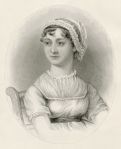
Jane Austen’s Social Media

I originally published this post on a Jane Austen related site in 2018. I hope you enjoy it! Sometimes I think the best part of writing Regency-era fiction is the research I get to do. There’s nothing I like better … Continue reading

The Georgian Card Game of Tontine

In Pride and Prejudice Elizabeth Bennet spent a few nights at Netherfield Park so she could nurse her ill sister, Jane. The first evening, after Jane had finally fallen asleep, Elizabeth ventured downstairs to join Mr. Darcy, Mr. Bingley, his … Continue reading

A Closer Look at Fitzwilliam Darcy

Hello, and happy Saturday to you!

Today I’m on the Austen Authors blog, talking about Fitzwilliam Darcy, the hero of Jane Austen’s Pride and Prejudice.

Was Darcy a meddling busybody, as Elizabeth Bennet supposed?

Or was he just a nice guy who tried to take care of the people he loved?

Click here or on the icon below to read the post and have your share in the conversation!


How England Learned of the Battle of Trafalgar

On October 21, 1805 the Battle of Trafalgar was fought between the English Navy and the combined fleets of France and Spain. England’s chances for victory were slim. The British force had twenty-seven ships; the enemy had thirty-three. But England’s … Continue reading

Walking with Lizzy Bennet

I love to walk. My daily walk lasts about an hour. When the weather is bad I walk on my treadmill. On good weather days I take to my neighborhood sidewalks, and sometimes I walk in circles around the quarter-mile track at the high school.

It’s an hour out of every day when I can simply enjoy the movement of my body in the fresh air. But most of the time, when I walk, I think. I’m often amazed by how many problems I solve, bad moods I correct, and bright ideas I come up with just by walking.

In that respect, I think I have something in common with Elizabeth Bennet, the heroine of Jane Austen’s Pride and Prejudice.

Elizabeth loved a good walk. She walked to Netherfield Park, “crossing field after field at a quick pace, jumping over stiles and springing over puddles with impatient activity.”

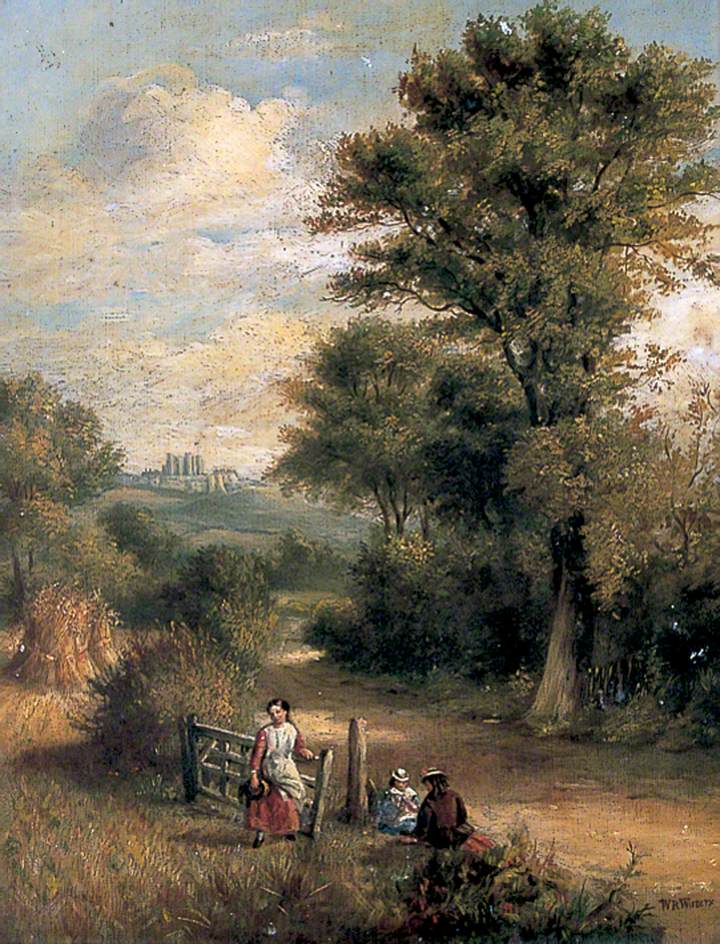
A Country Road Near Dover, Kent, William Richard Waters, 1845. From Dover Collections; Supplied by The Public Catalogue Foundation

She often walked to Meryton with her sisters, sometimes to visit their aunt, or to get Mr. Collins out of their father’s study, or “to inquire if Mr. Wickham were returned, and to lament over his absence from the Netherfield ball.”

But it wasn’t until she went to Hunsford to visit her cousin Mr. Collins and his wife Charlotte that we get a real sense of the joy Elizabeth felt when she went on one of her “solitary walks.”

There was a good reason for that. The imaginary village of Hunsford was located in the very real county of Kent; and Kent is known as The Garden of England.

It’s a lush county with fertile soil; for centuries Kent has been home to a myriad of fruit and hops farms.

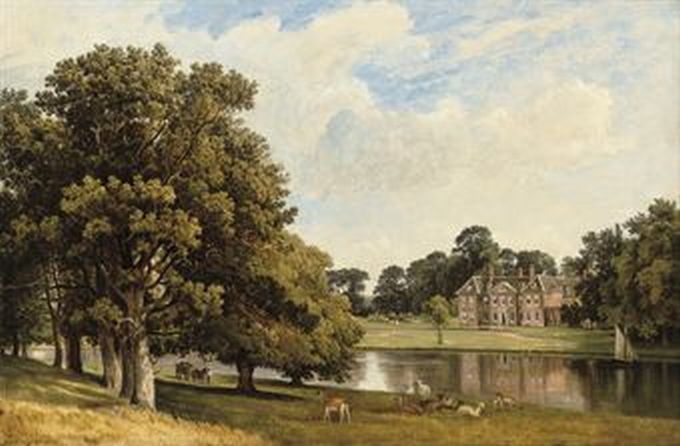
Chilston Park in the mid 1800s by Frederick Lee.

Sovereigns and aristocrats built castles and magnificent country retreats amid Kent’s beautiful landscapes, and in the story, Lady Catherine de Bourgh’s Rosings Park is among those country estates.  

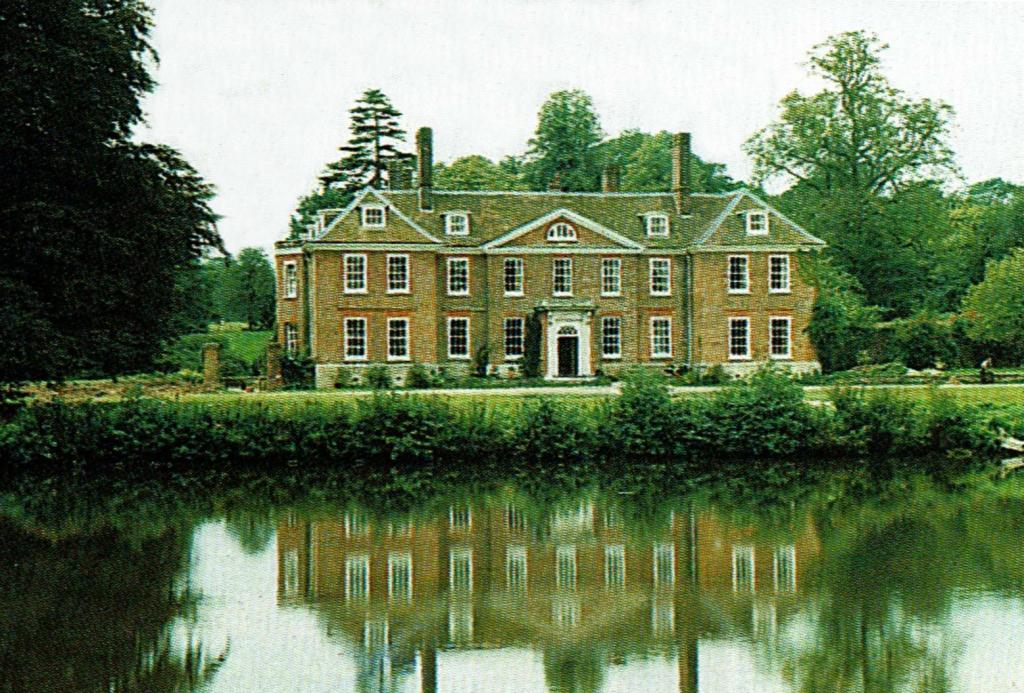
Chilston Park today.

In the spring—the very time of year in which Elizabeth arrived in Hunsford in the story—Kent is in bloom. “The weather was so fine for the time of year that she had often great enjoyment out of doors.”

A poppy field at sunset in Barham, Kent (courtesy of Visit England/Alex Hare).

And being an avid walker, Elizabeth quickly found her own favorite course for walking about the Kent countryside:

Her favourite walk, and where she frequently went while the others were calling on Lady Catherine, was along the open grove which edged that side of the park, where there was a nice sheltered path, which no one seemed to value but herself, and where she felt beyond the reach of Lady Catherine’s curiosity. In this quiet way, the first fortnight of her visit soon passed away.

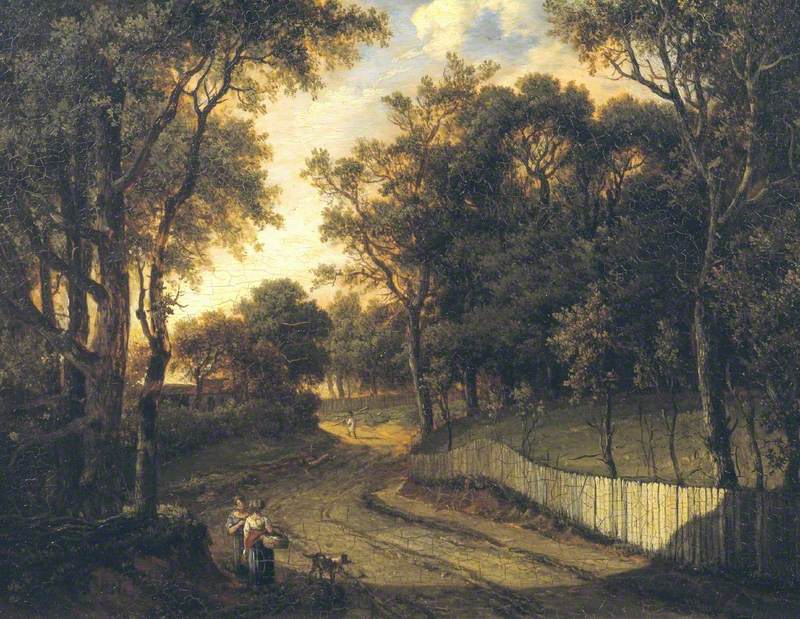
View Near Sevenoaks, Kent by Patrick Nasmyth, 1820; Supplied by The Public Catalogue Foundation

If Elizabeth’s walks were anything like mine, she relished her time alone in the out-of-doors, where she could simply enjoy her surroundings in peace. It’s no wonder, then, that she was a little miffed when Mr. Darcy intruded upon her walks:

More than once did Elizabeth, in her ramble within the park, unexpectedly meet Mr. Darcy. She felt all the perverseness of the mischance that should bring him where no one else was brought, and, to prevent its ever happening again, took care to inform him at first that it was a favourite haunt of hers. How it could occur a second time, therefore, was very odd! Yet it did, and even a third.

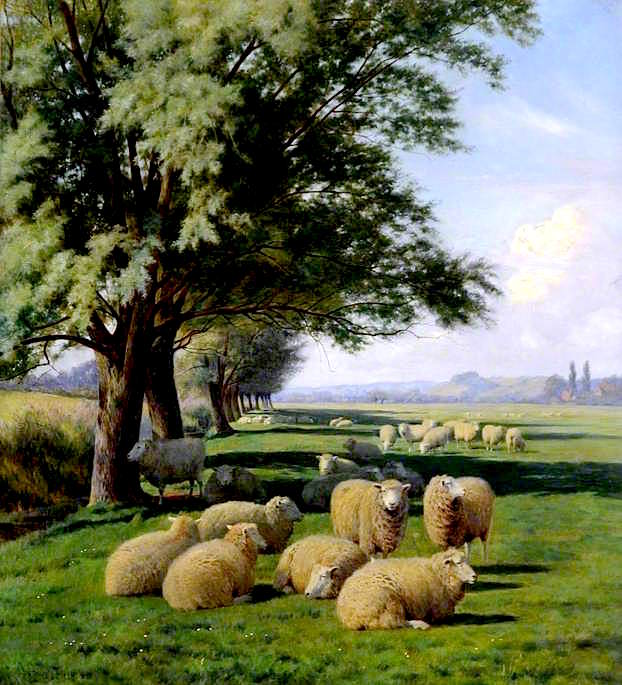
Near Canterbury, Kent, by William Sidney Cooper, 1904; Supplied by The Public Catalogue Foundation

Poor Elizabeth had to change her walking course to avoid meeting him again. But even after taking that extraordinary step, Darcy still found her on the morning after she rejected his offer of marriage:

“I have been walking in the grove some time in the hope of meeting you. Will you do me the honour of reading that letter?”

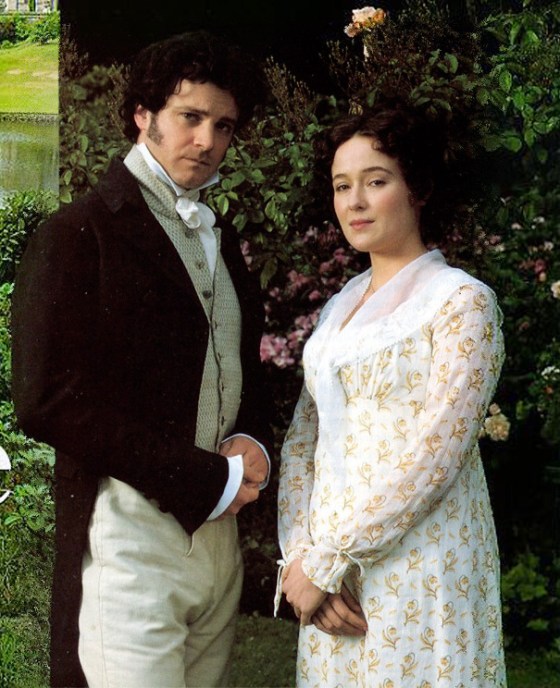
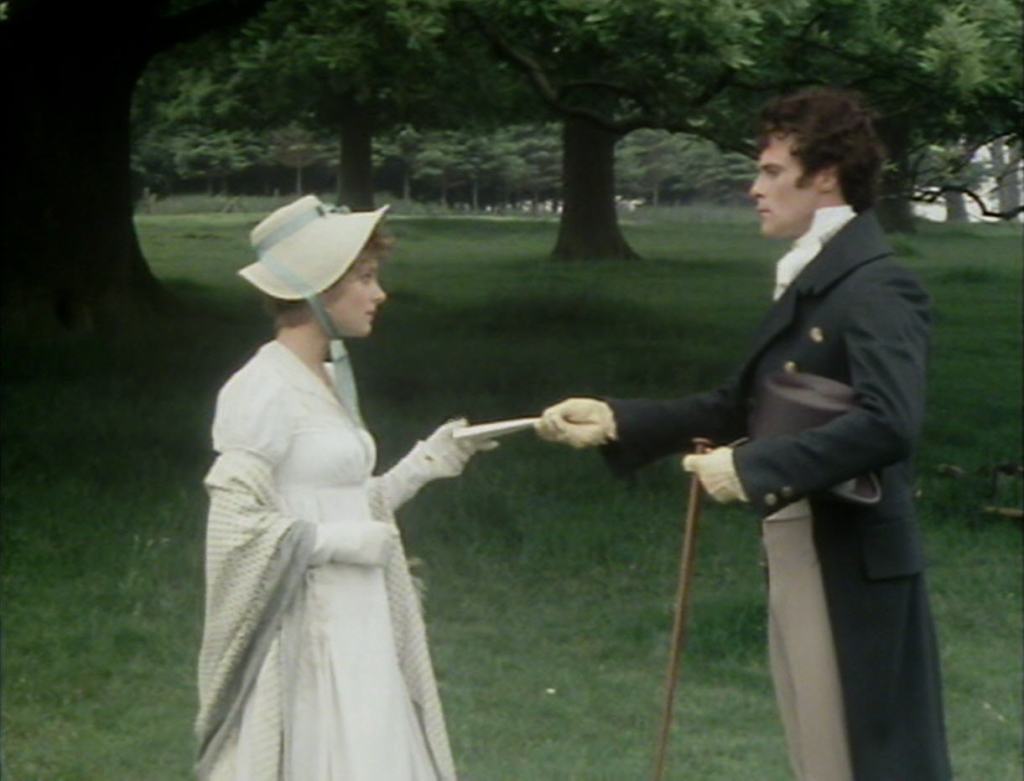
Mr. Darcy hands Elizabeth Bennet “the letter” in a scene from the 1985 BBC production of “Pride and Prejudice.”

That scene, when Darcy hands his letter to Elizabeth near the grove of trees, is one of my favorite scenes in Pride and Prejudice. It’s a pivotal moment in the story; and it seems fitting that Elizabeth should read the letter while she’s on one of her solitary walks and can absorb the letter’s revelations without interruption.

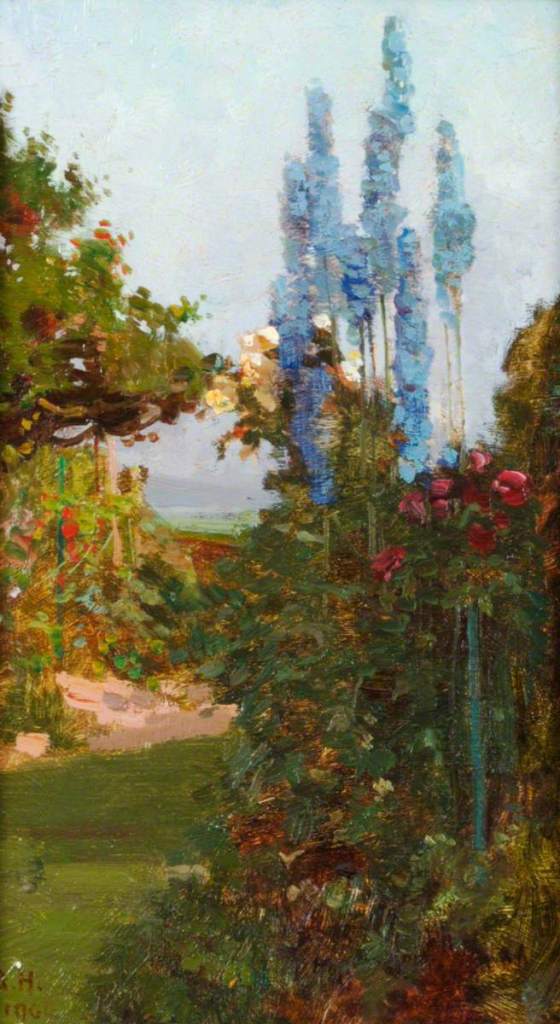
In a Garden in Kent, by Benjamin Haughton; Portsmouth Museums and Visitor Services.

I don’t walk in a setting as lovely and peaceful as the Kent countryside, but I still enjoy my daily walks. And like Elizabeth, I guard my solitude as I walk (saying a friendly “hello” or “good morning” to passersby notwithstanding). I return from my walks refreshed and comforted, and that, I think, was Elizabeth’s experience, too.

After re-reading the passages in Pride and Prejudice that describe Elizabeth’s walks, I realize that, like me, there must be other Elizabeth-style walkers in the world.

How about you? Are you a walker? Do you walk with friends or do you have a “love of solitary walks” like Elizabeth Bennet? Where do you enjoy walking?

Scenes from Cheapside

I’m working on a new story; it’s a variation on Pride and Prejudice that centers on the mayhem caused by Lydia’s elopement with Wickham. Some of the scenes will take place in the London home of the Gardiners in Cheapside. … Continue reading