The Art and Status of Regency Knife Urns

Usually, when I think about the fashions of the Regency era, I focus on the grand markers of wealth—the sprawling country estates, the fine horse-drawn carriages, and the absolute army of household servants. But sometimes, the ultimate display of high status and impeccable taste sat quietly right on the dining room sideboard.

I’m talking about the knife urn.

For the upper classes of Georgian and Regency society, storing your silverware wasn’t just a matter of utility; it was a matter of fashion. In many households the common form of cutlery storage was a mahogany box with a sloping top and a “serpentine” front. But wealthier households opted for neoclassical, urn-shaped cases. They were usually made in pairs to stand like stately sentinels on each end of a dining-room sideboard.
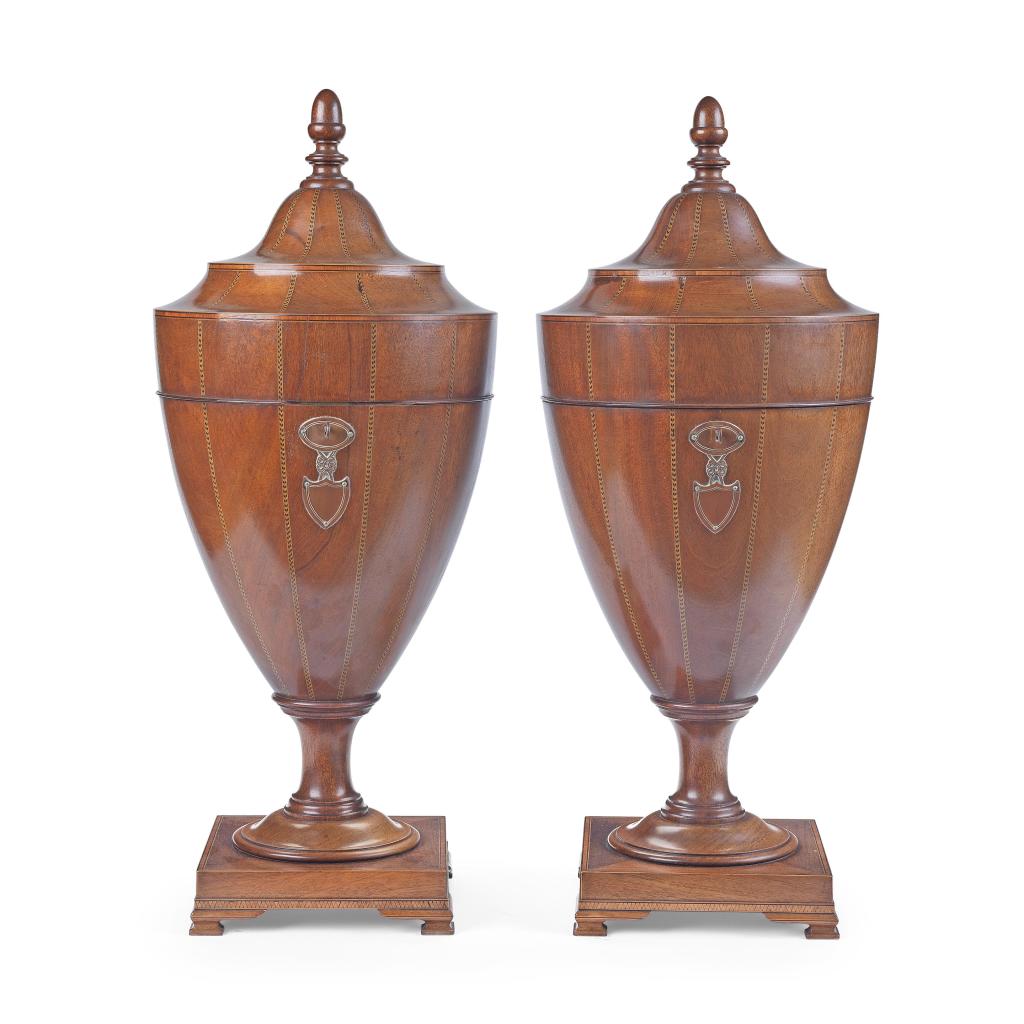

Famous period designers like Thomas Hepplewhite noted their “universal utility,” while Thomas Sheraton noted that making these exquisite cases had become such a highly specialized craft that individual London makers could build entire businesses solely around producing them. Crafted from the finest mahogany with intricate satinwood and ebony inlays, these urns featured lift-up lids that rose on a central support to reveal beautifully fitted interiors designed to showcase individual knives, forks, and spoons.
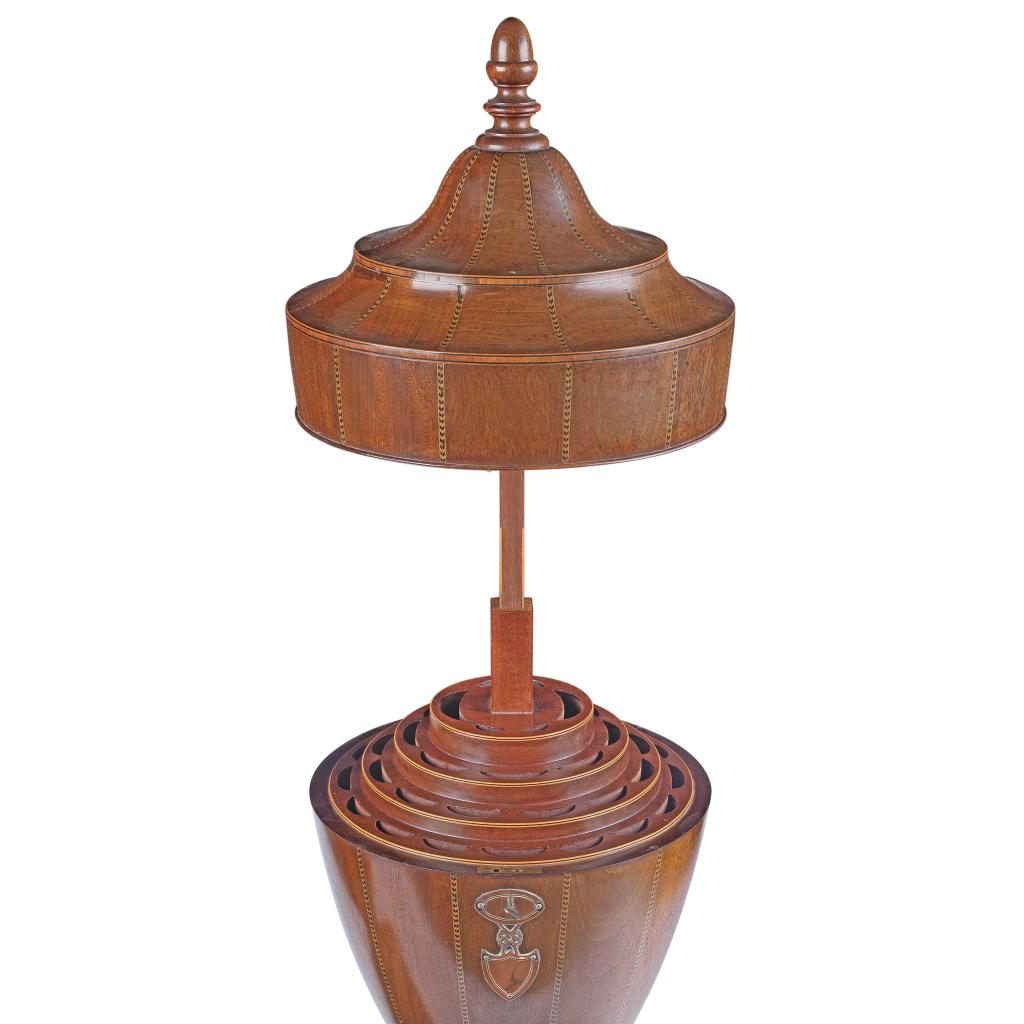

If you’ve never seen a knife urn in action, you only have to look at our favorite period dramas!

In the 1980 BBC adaptation of Pride and Prejudice, you can see a costly, elegant knife urn standing tall just inside the door of the Bennet family’s dining room at Longbourn.
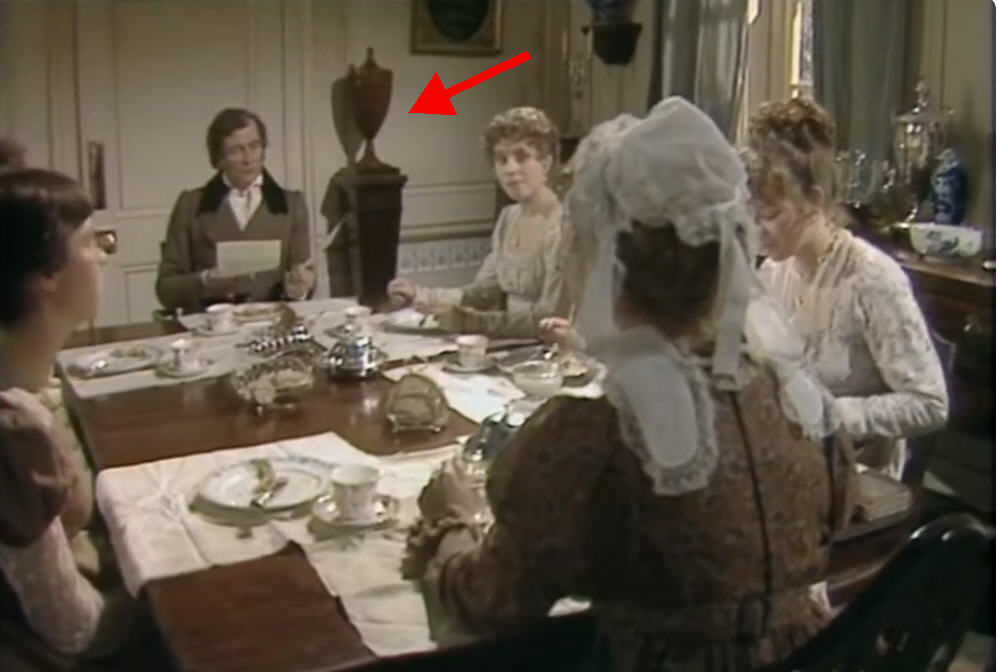

I think this small decorative detail is absolutely appropriate. The Bennets were a family of acceptable gentlemanly wealth—they kept a cook, multiple house servants, and a carriage—so having a fashionable neoclassical urn perfectly matches their social status.

Fast forward to the iconic 1995 BBC version of P&P, and the set designers chose a slightly different, yet equally accurate option for Longbourn. On the Bennet sideboard, we can see the classic serpentine-style cutlery box, bursting with silver.
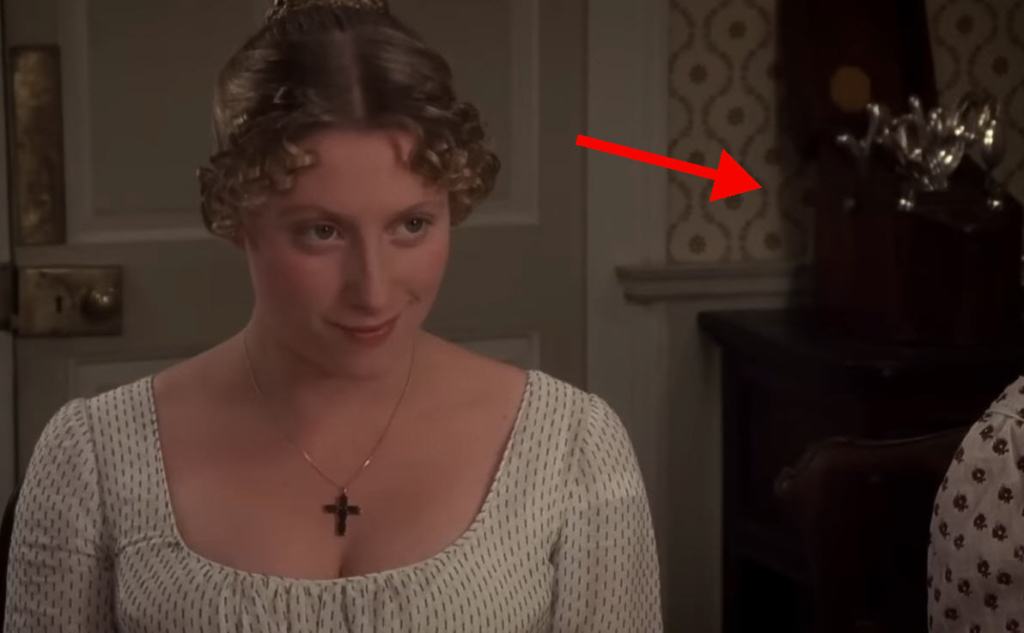

And what about the truly affluent, fashion-forward characters we love? Naturally, the ultra-fashionable Bingley dining room at Netherfield had to have the best of the best. If you look closely at the background behind Mrs. Hurst, you can see a magnificent knife urn reigning over the Netherfield dining room.
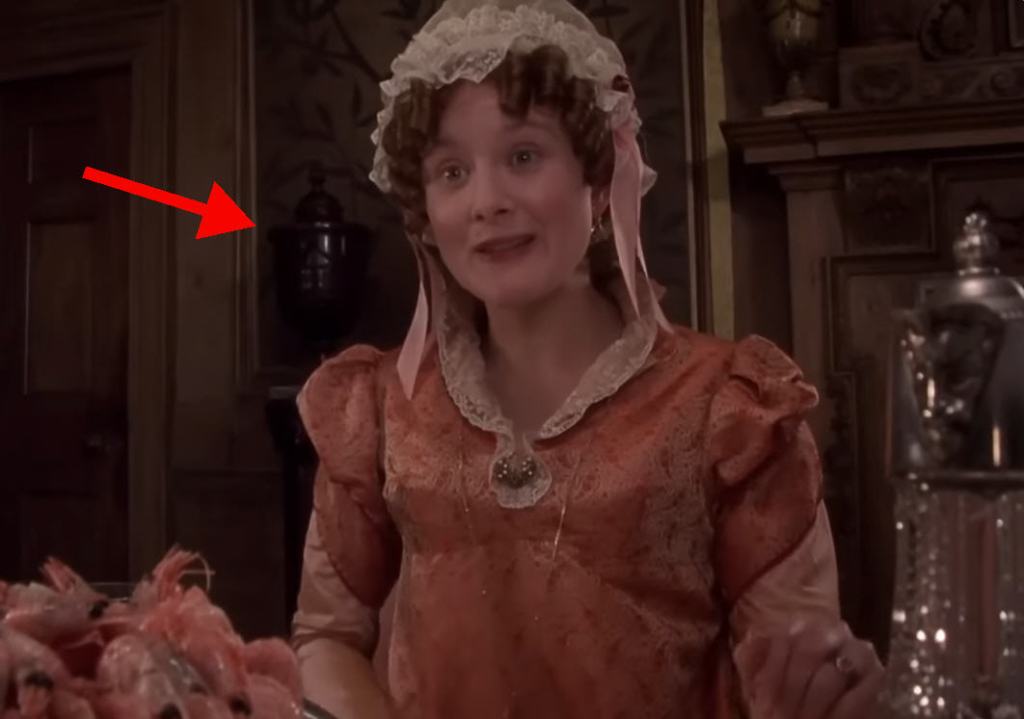

It is a wonderful detail that subtly shows the Bingley sister’s desire to look modern and wealthy.

Sadly, very few of these genuine knife urns  survive with their original interiors intact today. During the Victorian era, many families ripped out the cutlery slots to convert them into stationery boxes and desk tidies. But when we find them preserved—or spot them gracing the backgrounds of our favorite Jane Austen adaptations—they serve as a beautiful reminder of how the Regency era turned even the most mundane household objects into an art form.

As a writer, it’s these tiny, everyday historical textures that make world-building so much fun. The next time you read about a lavish dinner party in one of my books, there’s a very good chance I wrote the scene while imagining a pair of beautiful mahogany urns gleaming in the candlelight.

I’D LOVE TO HEAR FROM YOU. Are you the type of viewer who pauses period dramas to inspect the furniture in the background, or do you get completely swept up in the action and dialogue? What are your favorite decorative details from Regency households?

What Mary Bennet Got Very, Very Wrong

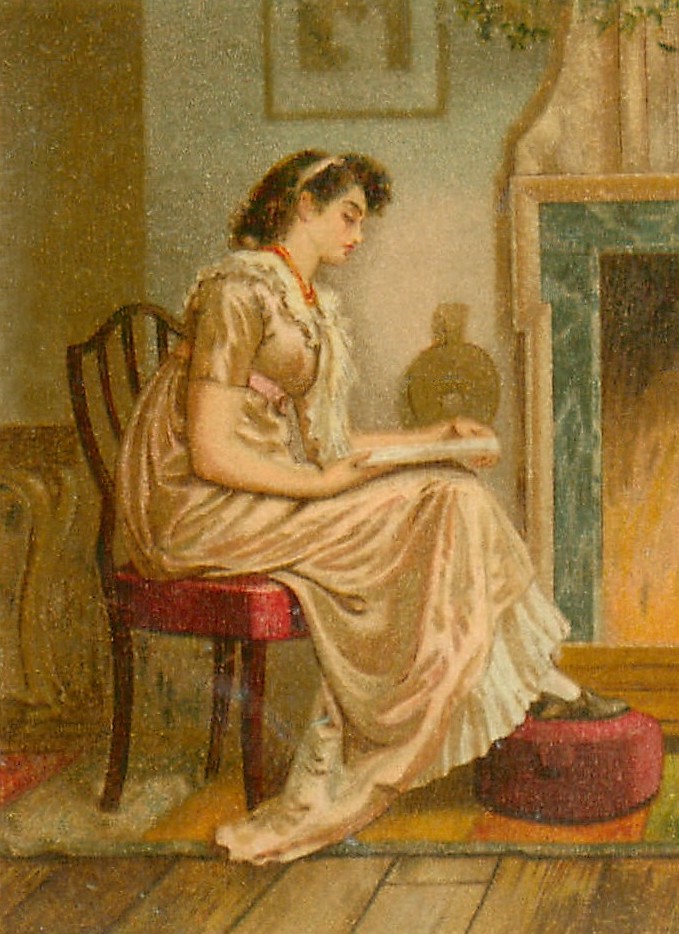
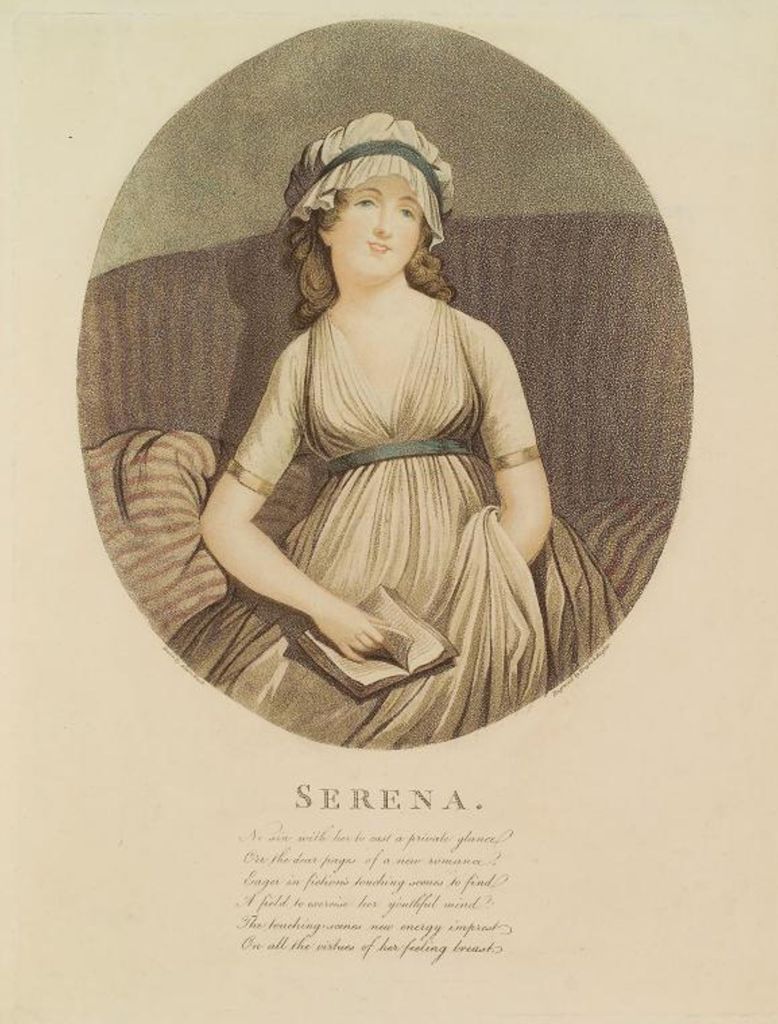
A few years ago I stumbled upon an old postcard that featured an illustration of a young woman dressed in a Regency-era gown and an open book on her lap. Below the image were a few lines of poetry that I didn’t recognize, but I planned to research someday.

Well, that day has finally come! It turns out those few lines of poetry are from a much longer poem by William Hayley titled, “The Triumphs of Temper.”

Hayley’s poem was a wildly popular best-seller during the 1790s. It centers on a young woman named Serena, whose favorite pastime is staying up all night reading novels!


Here are those intriguing lines on the postcard:

No one with her to cast a private glance,
O’er the dear pages of a new romance,
Eager in Fictions touching scenes to find
A field, to exercise her youthful mind;
The touching scenes new energy impress’d
On all the virtues of her feeling breast.

What makes this postcard so interesting to me is how it contrasts with Rev. James Fordyce’s Sermons to Young Women—that infamous and tedious book Mr. Collins insisted on reading aloud to the Bennet sisters in Pride and Prejudice.

When I wrote my continuation, Mary and the Captain, I took some literary license and had Mary Bennet constantly reading and quoting from Fordyce’s book. She used his rules of conduct for women as a kind of social shield, memorizing his sermons without truly understanding how to apply them in real life. She agreed with Fordyce’s warning that novels would inflame a young woman’s imagination—until she read a novel for the first time and found herself enjoying it.


William Hayley, on the other hand, suggested a completely different set of rules of conduct for Regency women. While moralists like Fordyce condemned novels, Hayley argued Serena’s novel-reading habit was a positive force that taught emotional resilience and empathy.

That internal, heroic resilience is what I wanted to give Mary Bennet in her own story. She didn’t need to stop reading or change her studious nature to become a true Austen heroine; she just needed to put down the dry sermons, open her heart, and step out into the world. Luckily, she met a dashing young army captain who helped her do just that—by handing her his own copy of Robinson Crusoe, the very first novel Mary ever read!

You can find Mary and the Captain on Amazon here.

And you can read the first canto of Hayley’s “The Triumphs of Temper” here.

Dainty, Delicate, and Divine: My Regency Discovery

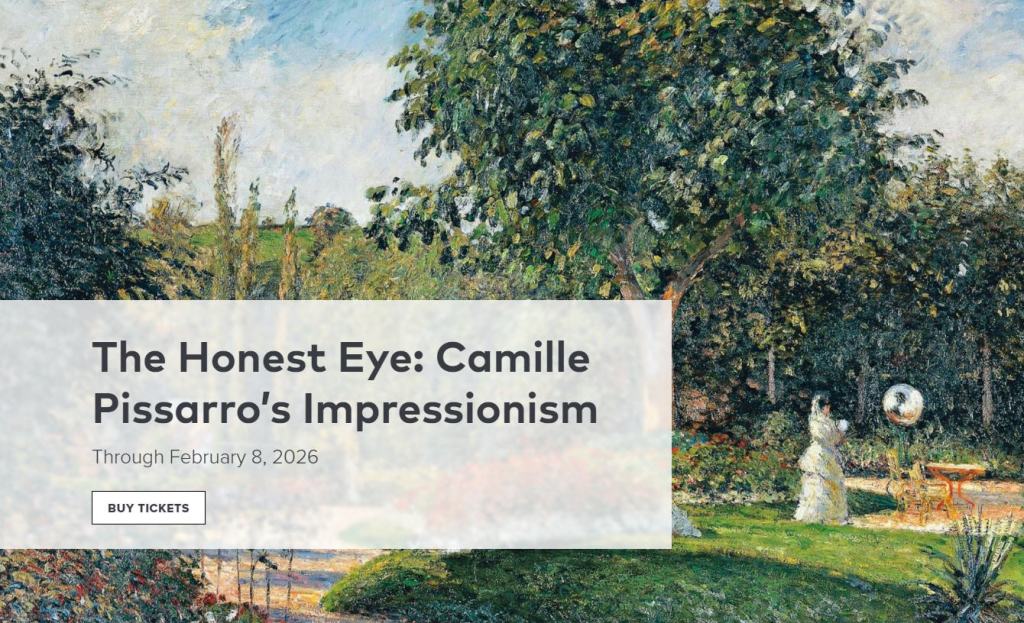
I recently went with friends to see the Camille Pissarro exhibit at the Denver Art Museum. I’m not an art expert, by any means, but I have a partiality for French Impressionism, and I especially enjoyed viewing the evolution of his painting style, from the realism of the Barbizon School to the light and colorful Impressionist movement.

After we finished seeing Pissarro’s works (and visiting the gift shop), we wandered through some of the other collections on display, and ended up in the architecture and design exhibit.

I was delighted to find that my casual wanderings led me to two pieces from the historical era I love the most: the Regency.

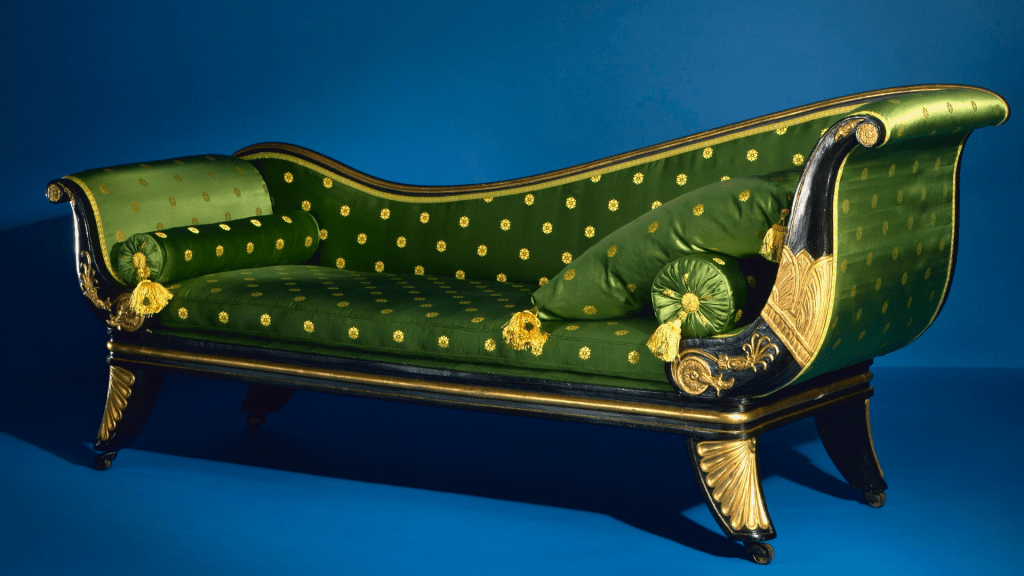
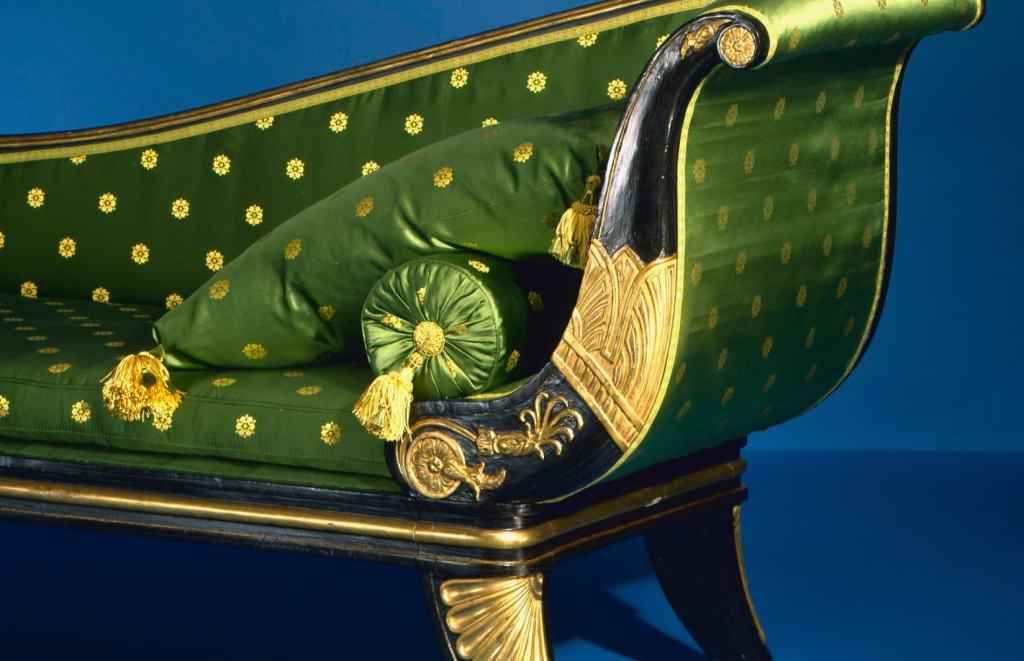
First was a piece labeled as a “Neoclassical Chaise Lounge” dated 1810. The silk upholstery is reproduction, but the warm rosewood and lustrous gilding appear to be original.

The detail is fantastic, and the good news is, the museum purchased the piece so it will be well cared for and available to be admired by future museum-goers for generations to come.

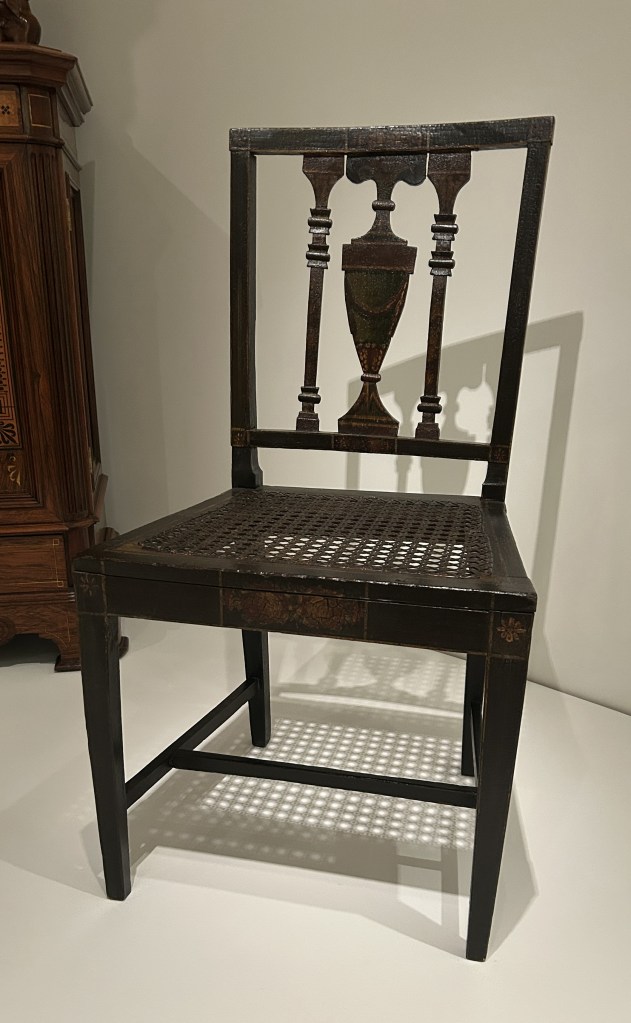
The second piece was American in origin, but created in the Regency style (which, incidentally, was equally popular in the U.S. at the time). It’s a simple side chair, made of birch and cane, that dates to the 1790s.

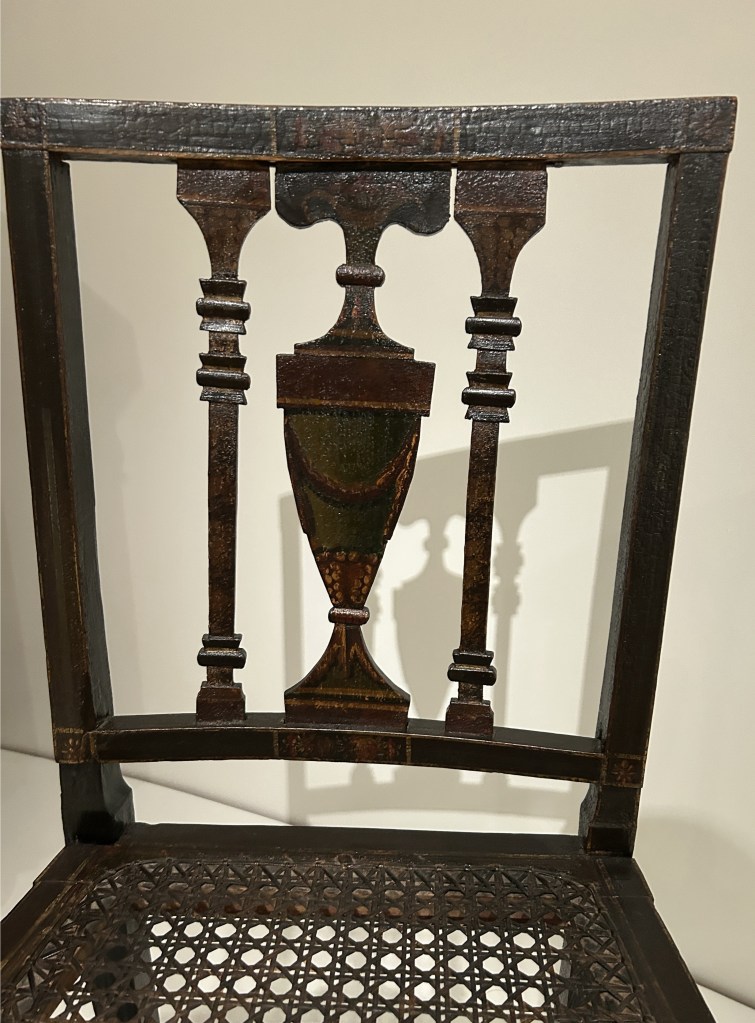
At first glance, it’s difficult to see the beauty of it, although the urn-shaped center on the back of the chair immediately caught my eye. The back is decorated in green and gold. The urn features a painted drapery swag.

In person, the back of the chair looks so dainty and delicate, it’s a wonder to me that it survived even two decades, let alone two hundred years!

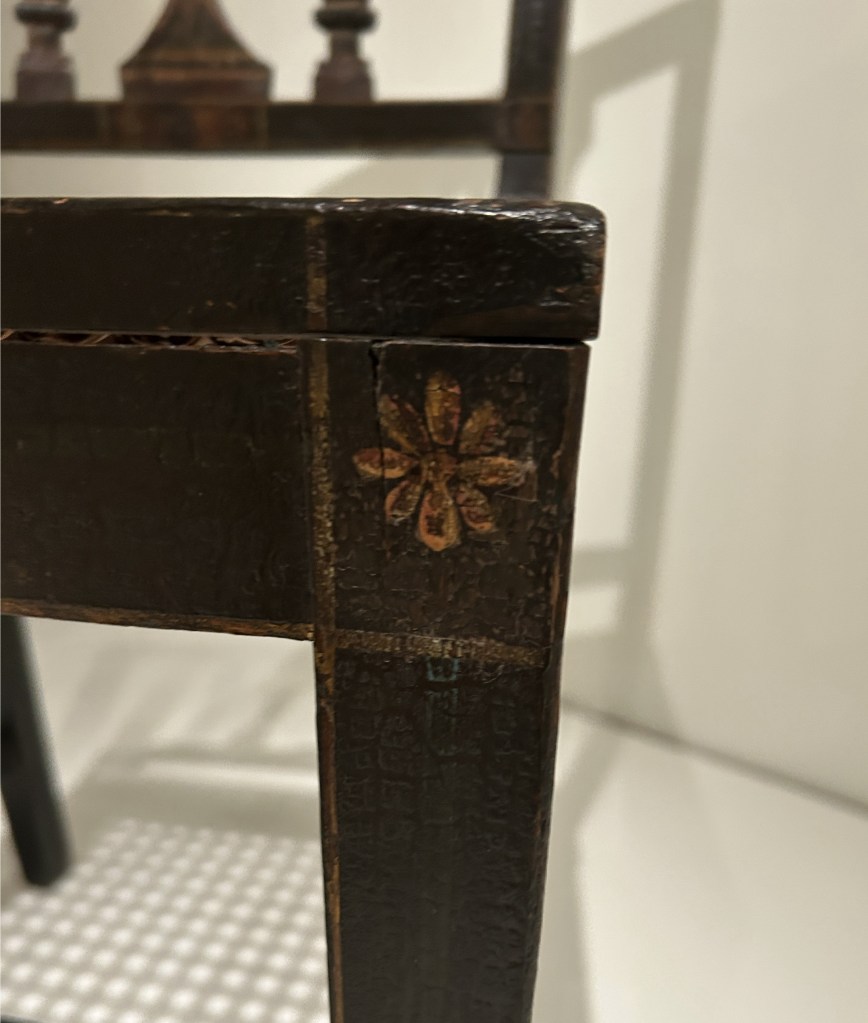
If you look closely, you can see gold paint outlines the chair’s front apron, seat, and legs. At the top of both front legs is a green and gold flower, from which a green vertical decoration trails down the leg to the floor.

I enjoyed the Pissarro exhibition immensely, but seeing these two pieces really put the cherry on the top of my museum visit. It’s always a marvel to me when beautiful creations are cared for and survive for future generations to appreciate and love them as the works of art they truly are.

So—to whoever it was that took such wonderful care of this delightful chaise and delicate chair—Thank you!

Can you imagine a Regency heroine reclining on that stunning rosewood chaise while reading a letter from her suitor? If you were decorating a Regency-era drawing room, which of these pieces would you choose to include: the gilded Neoclassical chaise or the dainty birch side chair with the painted urn? Let me know in the comments!

What Story Does This Tell?

There’s an old saying that “every picture tells a story.” I think some paintings are better at storytelling than others, because they spark more questions in my mind than answers. Here’s an example of such a painting: The piece is … Continue reading

The Art of J.M.W. Turner

I find inspiration for my writing in many things. Snippets of overheard conversations, news articles, and reading books from an historical time period are all things that inspire me. I’m also inspired by viewing art pieces that depict the Regency … Continue reading

More on Beau Brummell and a Short Story

One of my favorite places to shop is my neighborhood antique mall and in Denver we have several. On Broadway, just south of the downtown area, is Antique Row, where antique stores of different varieties pack a seven block stretch. … Continue reading